
"kopi-Siew Dai"
246 article(s) found

Leaves and flowers of coffee
Coffee leaves opposite, usually two rows spreading, individual single leaf whorl, petiole short, leaf leathery, green (dark green on the upper surface, light green on the lower surface). Glossy oval, oval to long oval. The leaf size of small-grain coffee is relatively uniform, the leaf is small and the end is longer, and the leaf edge wave is obvious, about 12-16 cm long and 5-7 cm wide. The leaves of the medium grain species are long and large, soft and thin.

A brief introduction to the description of flavor, taste and aroma characteristics of high acidity Angolan boutique coffee beans
Ninety-eight per cent of coffee in Angola (Angola) is Roberts. The best brands in Angola used to be Ambriz, Amborm and NovoRedondo, all of which are known for their consistent quality. The characteristics of Angolan coffee: flavor: not available in the West in recent years, but used to be famous for its high acidity suggested roasting method: medium

The famous Yunnan Baoshan coffee brand recommends how to make Yunnan small coffee beans without miscellaneous flavor?
Professional coffee knowledge exchange more coffee bean information please follow the coffee workshop (Wechat official account cafe_style) in the Homega Coffee I close contact with shelling, washing, sun drying and other processing projects. Learn how we usually get coffee beans for coffee. Visit Jinglan Coffee to learn about the production and packaging process. According to the degree of baking, the way of brewing

Botanical characteristics of small seed Coffee Coffee shallow Root crops
1. Root coffee is a shallow root crop, and the plant propagated with seeds is a cone root system. From the point of view of varieties, the roots of small and medium grain species are shallow, while those of large grain species are deeper. Yunnan small grain coffee is a 3-year-old 4-year-old fruit tree with a deep main root of about 70cm. The lateral root that grows horizontally from the main root is called the horizontal lateral root, the vertical lateral root grows downward, and the root extracted from the lateral root is called the secondary lateral root.

A brief introduction to the cultivation of boutique coffee beans in Angola, which are almost impossible to buy, geography, climate, altitude.
In the 1970s, Angola produced about 180000 tons of commercial coffee per year. With an area of 161000 hectares and an annual output of 99550 tons, Uige Province is the largest coffee grower.

Consistent Angola Fine Coffee Bean Origin History and Culture Introduction
Angola was once one of the world's largest coffee producers, with a record coffee production of 225,000 tons in 1974. But Angola's coffee production fell sharply after a 27-year civil war broke out after independence in 1975. The first batch of Angola coffee exported to the United States-11 tons in total-has arrived in the country, Angola's ambassador to the United States, Agostinho Tavares, told the daily Angola in New York on Monday.

Botanical characteristics of small seed Coffee characteristics of Coffee in Yunnan
1. Root coffee is a shallow root crop, and the plant propagated with seeds is a cone root system. From the point of view of varieties, the roots of small and medium grain species are shallow, while those of large grain species are deeper. Yunnan small grain coffee is a 3-year-old 4-year-old fruit tree with a deep main root of about 70cm. The lateral root that grows horizontally from the main root is called the horizontal lateral root, the vertical lateral root grows downward, and the root extracted from the lateral root is called the secondary lateral root.
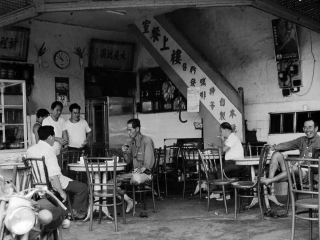
An article will take you to know about Nanyang coffee ~
Everyone must be no stranger to the Italian family, the ancestor of coffee, but did you know that the Chinese also have their own coffee system? In Southeast Asia, there is a kind of coffee called "Nanyang Coffee". It is a coffee system created and evolved by an army of Chinese who went south to do business to make a living. "Nanyang Coffee" literally means
Angora coffee beans
Angola's Angola, which has been growing coffee for more than 100 years, ranked first in Africa until 1960 and reached 225000 tons in 1979, ranking second in Africa and fourth in the world. The output in 1992 was 5000 tons. Sisal production is second only to coffee, and the level of per unit yield is higher. In 1986, the output reached 20,000 tons, sisal ranked second in Africa both in terms of output and export volume. Luo'an, Xinhuanet

Brief Introduction to the Treatment Method of Grindness Roast Degree of High Acidity Angola Fine Coffee Bean
Angola Coffee Features: Flavor: Not available in the West in recent years, but previously known for its high acidity Suggested Roast: Medium to Deep Roast: Average Market for Angola Coffee: Mid-1970s, 98% of Angola's annual coffee exports were Roast (probably the best Roast coffee in Africa), total production, 1990
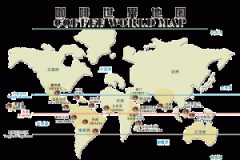
African coffee Angora coffee beans
Angolan coffee Angola Angola has been growing coffee for more than 100 years, and its output has been the first in Africa until 1960, reaching 225000 tons in 1979, ranking second in Africa and fourth in the world. The output in 1992 was 5000 tons. Sisal production is second only to coffee, and the level of per unit yield is higher. In 1986, the output reached 20,000 tons, sisal ranked second in Africa both in terms of output and export volume.

A brief introduction to the cultivation of high-acidity Angolan boutique coffee beans, geographical location, climate and altitude
The origin of coffee in Angola: 98% of the coffee in Angola (Angola) is Roberts coffee. The best brands in Angola used to be Ambriz, Amborm and NovoRedondo, all of which are known for their consistent quality. Angola was once one of the largest coffee producers in the world, with coffee production reaching a record 22.5 in 1974
Price of Angolan coffee beans
Angolan coffee Angola Angola has been growing coffee for more than 100 years, and its output has been the first in Africa until 1960, reaching 225000 tons in 1979, ranking second in Africa and fourth in the world. The output in 1992 was 5000 tons. Sisal production is second only to coffee, and the level of per unit yield is higher. In 1986, the output reached 20,000 tons, sisal ranked second in Africa both in terms of output and export volume.

Consistent cultivation of boutique coffee beans in Angola A brief introduction to geographical location, climate and altitude
The market for Angolan coffee: in the mid-1970s, 98 per cent of Angola's annual coffee exports were Roberts (probably the best in Africa), but total production fell in 1990. Most of Angola's coffee was exported to the United States, the Netherlands and, of course, Portugal in the 1970s. Angola produced about 180000 tons of commercial coffee a year.

The first Piye Coffee in Shenzhen has opened! Take a peel off the grudge between coffee and Starbucks
A month ago, we reported that the opening of coffee grandmaster Yepi Ye Coffee is accelerating in the Chinese market. At the same time, snack generation reported: Fabien Simon, CEO of JED Peets, pointed out at the first half of 2021 that by the first half of 2021, the number of Piye coffee stores in China had reached 40, and it is expected to achieve the original target of five to six years in the next two to three years.
Yunnan will start 20,000 tons of instant coffee production line next year
The history of coffee cultivation in Yunnan dates back to 1892. A French missionary brought coffee seeds into Yunnan from abroad and planted them successfully in a valley in Binchuan County, Yunnan Province.

A brief introduction to the treatment method of grinding degree and baking degree of fine coffee beans in Angola, once a big coffee country.
According to officials, Angola's coffee production is expected to reach 4000 tons in 2006, an increase of 34 percent over 2005. Coffee production increased by 1000 tons between 2005 and 2006. The major coffee producing provinces are Kwanza Sul, Bengo, Kwanza North and Uige.
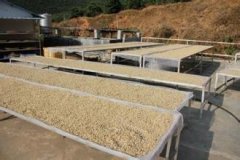
A brief introduction to the Market Price of High acidity Fine Coffee Bean varieties in Angola
Angolan Agriculture Minister Afonso Pedro Kanga revealed that Angolan coffee production this year is expected to double that of last year to 12000 tons. In 2008, in order to regain its status as a major coffee producer in the world, the Angolan government introduced a plan to receive a preferential micro-loan of US $5000 per farmer to grow coffee. Origin of coffee in Angola: 98% of coffee in Angola (Angola) is Luo

A brief introduction to the market price of high-quality Angolan boutique coffee beans
In analyzing the global financial crisis and the situation in the international coffee market, Sako said that there are still gaps in the international coffee market, and Angolan coffee should not only increase its output, but also improve its quality, so that it can really fill the supply gap. Angolan Agriculture Minister Afonso Pedro Kanga revealed that Angolan coffee production this year is expected to double that of last year to 12000 tons. In 2008, to recapture the world
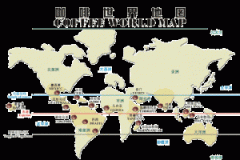
African specialty coffee Angola boutique coffee beans
Angolan coffee Angola Angola has been growing coffee for more than 100 years, and its output has been the first in Africa until 1960, reaching 225000 tons in 1979, ranking second in Africa and fourth in the world. The output in 1992 was 5000 tons. Sisal production is second only to coffee, and the level of per unit yield is higher. In 1986, the output reached 20,000 tons, sisal ranked second in Africa both in terms of output and export volume.